Tukituki candidates debate climate risks, housing and jobs
Tukituki candidates found common ground on protecting productive land and strengthening flood defences at tonight’s electorate debate, but differed over climate policy and how to revive Hawke’s Bay’s economy.
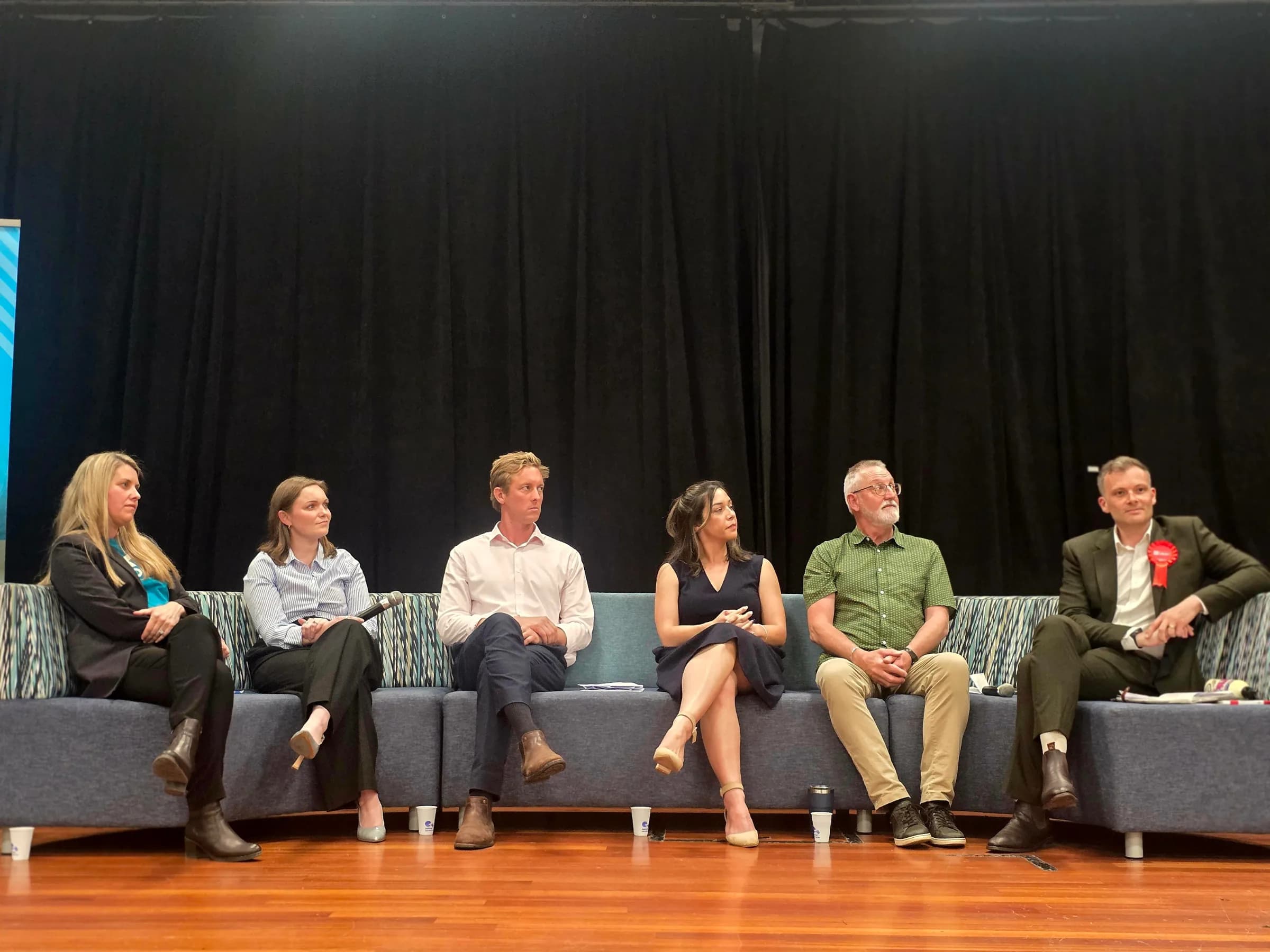
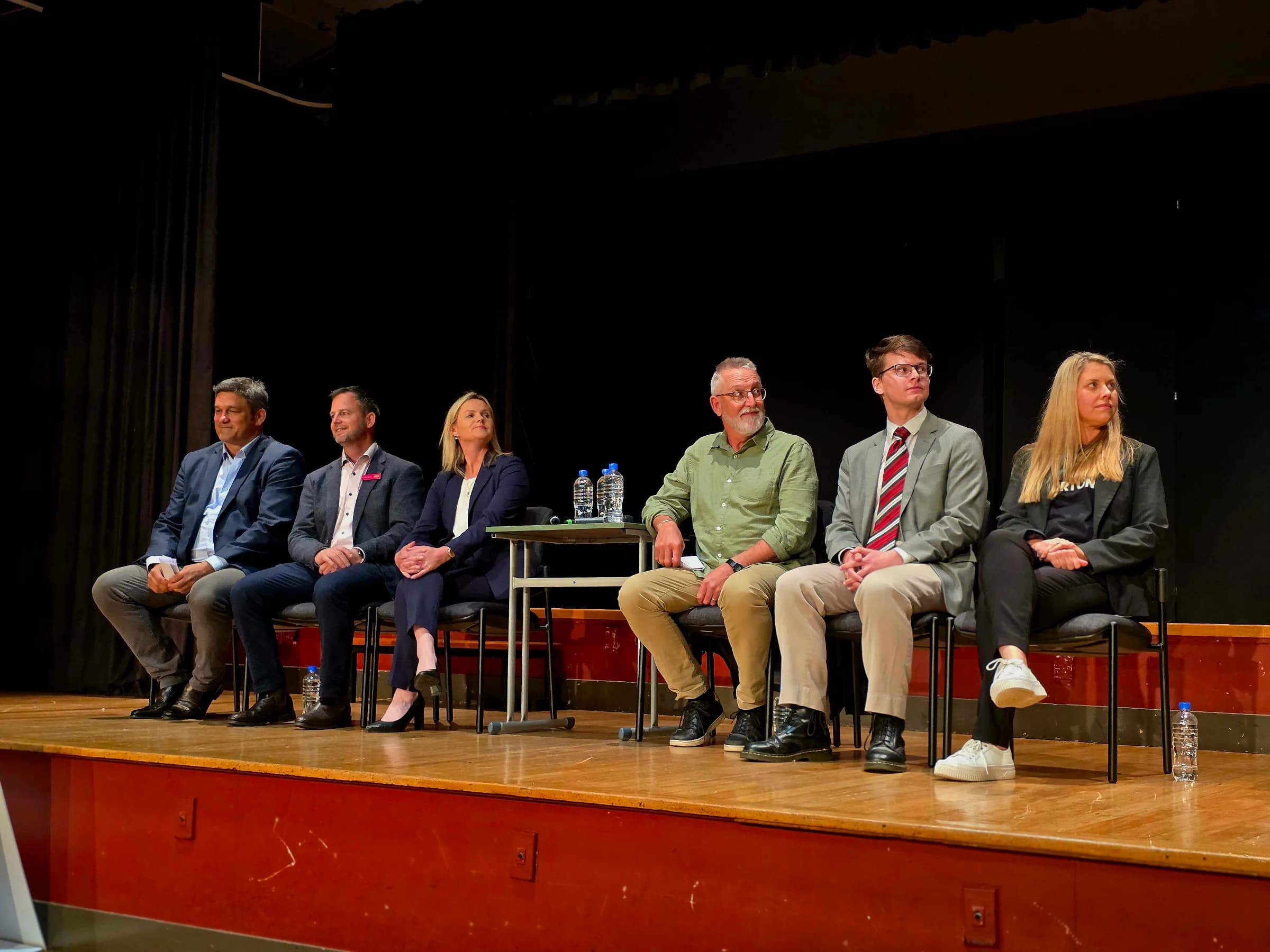
National’s Tukituki MP Catherine Wedd joined Labour’s Dan Scott, New Zealand First’s Taine Randell, ACT’s Rob Douglas and the Opportunity Party’s Rachel Ward at the Hawke’s Bay Today event at Karamū High School.
Green Party Napier candidate Roy Boonen represented his party.
Asked how they would address threats to lives and livelihoods following Cyclone Gabrielle, candidates emphasised stronger flood protection, better planning and preparing communities for future disasters.
Scott, a meteorologist, said reducing emissions and adapting to climate change needed to go together.
He advocated nature-based protection, including restoring wetlands and widening rivers, and criticised the Government’s changes to environmental safeguards.
Wedd pointed to investment in stronger bridges, stopbanks and transport connections, saying the region needed to build back stronger.
She also highlighted water security as summers became drier and the need to keep new development away from hazards.
“We need to stop building in dumb places.”
Randell emphasised adaptation and innovation, saying the region needed to be prepared when flooding disrupted roads and communities.
Ward warned against allowing the lessons of Gabrielle to fade with time.
“Climate change is here.”
She called for long-term political agreement and outlined Opportunity’s proposed climate resilience fund, including support for nature-based solutions and communities facing managed retreat.
Douglas supported stronger flood defences and argued that insurance costs should reflect the risks of building in vulnerable locations.
Boonen called for the restoration of erosion-prone land and said New Zealand had a responsibility to reduce emissions despite its size.
Differences over climate policy became more explicit during audience questions, when a farmer challenged National over the Emissions Trading Scheme.
Ward defended retaining and strengthening the scheme while helping farmers adapt and diversify, including through incentives for biodiversity.
Scott supported the ETS but wanted forestry settings reviewed. Boonen advocated rewarding farmers who established permanent native forest.
Wedd defended the Government’s approach to agricultural emissions and reducing regulations on farmers, saying National had no immediate plans to change the broader ETS.
Douglas argued that international climate policy needed to better recognise the differences between methane and carbon dioxide.
“So we think Paris needs to change or we need to come out of it.”
Randell outlined New Zealand First’s opposition to the Paris Agreement and argued for investing money in emissions reductions within New Zealand rather than spending it overseas.
Housing prompted more common ground, although candidates acknowledged the tension between building affordable homes and protecting neighbours and productive soils.
A reader asked what protections existing homeowners should have when intensification affected privacy, sunlight, parking and neighbourhood amenity.
Douglas said clear zoning rules were essential so homeowners and developers knew what to expect.
Ward supported intensification, particularly around transport hubs, alongside nationally consistent planning zones and protection for productive land.
Scott favoured building upwards rather than spreading onto fertile soils or floodplains, with housing near transport routes, shops and existing infrastructure.
“So build houses up, do it where it makes sense, where there’s already transit corridors and punctuated with lots of green space.”
Boonen also supported intensification but said neighbours’ concerns needed to be heard and urban green space preserved.
Wedd said resource management reform would help get homes consented faster, while acknowledging Hawke’s Bay’s particular need to protect food-producing land.
Randell questioned whether longstanding commitments to protect the plains were being followed through.
“Every year, more of the plains get built on.”
He called for simpler planning and greater determination to protect productive land.
Asked how the region could regain its economic “mojo” following cyclones, industry closures and business failures, candidates repeatedly returned to energy costs.
Douglas argued that removing regulatory barriers and encouraging private investment in electricity generation would help bring prices down.
Scott said Hawke’s Bay should make greater use of its sunshine and wind to generate renewable electricity closer to households and businesses.
Ward advocated stronger powers for the Commerce Commission, investment in energy resilience and support for businesses and households to electrify.
Boonen highlighted the Greens’ Kiwi Power proposal and support for growers moving towards regenerative and organic practices.
Wedd pointed to export opportunities, resource management reform and water storage as ways to create jobs and support horticulture.
Randell drew on his business experience to argue that difficult conditions could drive diversification into higher-value products.
“The key to prosperity is not growing peas. It’s not growing corn. It’s not growing the lowest-value product we can in the world.
“It’s innovation, high-value product. That’s where we’re going to go.”
Earlier, difficulty hearing a question produced a brief misunderstanding during the quickfire round.
Wedd initially answered yes while struggling to hear a question about funding the Mongrel Mob to provide rehabilitation programmes. After it was repeated, she made her opposition clear: “Absolutely not”.
Douglas also opposed such funding. Ward said she was personally opposed, while noting her party had not issued a specific statement on the issue. Boonen said funding decisions should be based on the quality of an application, monitoring and outcomes.
An audience question about government debt brought further differences over paying for election commitments.
Douglas argued for smarter spending and greater reliance on private enterprise. Wedd emphasised controlling expenditure and growing the economy.
Boonen advocated greater contributions from large technology companies and banks, while Ward pointed to Opportunity’s proposed tax changes.
Scott defended investment in services such as primary healthcare as a way to prevent greater costs later.
“Spending isn’t the enemy. Spending today saves tomorrow.”