Video: Seymour pushes ACT party vote in Hawke's Bay to ‘lock Labour out’
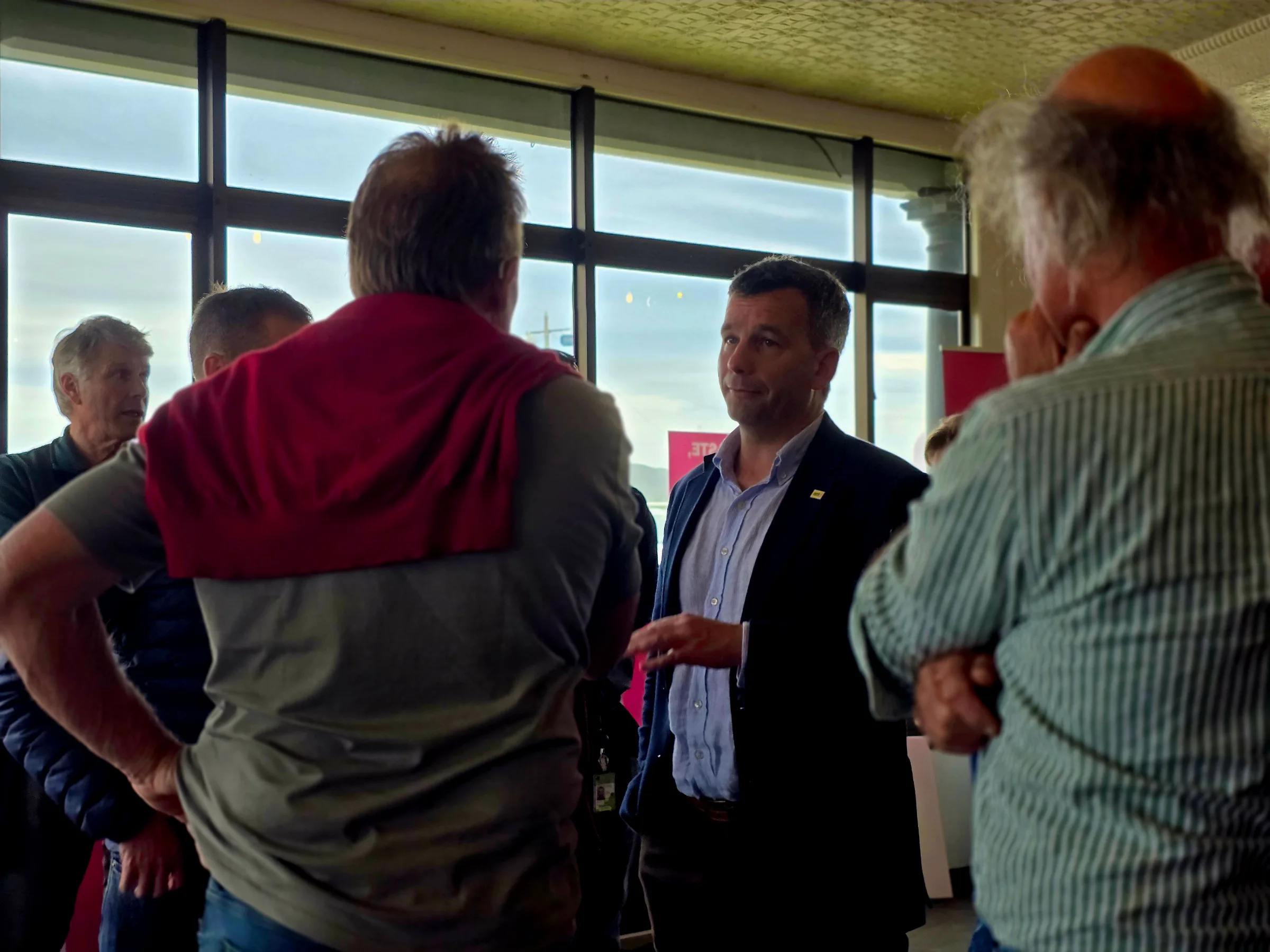
David Seymour has urged Hawke’s Bay voters to party vote ACT, even if they back National’s local candidates, to increase its numbers in Parliament and help “lock Labour out” of government.
The ACT Leader and Deputy Prime Minister made the pitch to hundreds of people at a standing-room-only public meeting at Hawke’s Bay Racecourse in Hastings on Saturday.
“If you like what you hear today, then please give your party vote for ACT,” Seymour told the crowd.
“I don’t want to be mean to my local candidates, but if you think Katie Nimon or Catherine Wedd are good local candidates and you think that they will fight for you as a local constituency MP, vote for them. That’s okay.”
ACT is standing Rob Douglas in Tukituki and Johno Ormond in Napier, with Seymour telling the crowd the party vote was the way to get ACT’s Hawke’s Bay candidates into Parliament.
Speaking to Hawke’s Bay News after the meeting, Seymour reinforced the message.
“It’s the party vote for ACT that will make the difference in Hawke’s Bay.”
He said Douglas and Ormond could potentially enter Parliament through ACT’s party list and acknowledged the incumbent MPs appeared to have “quite big leads”.
“So rather than using our energy to try and defeat them in their electorates, as long as the people think that they are doing a good job answering phone calls, being diligent local MPs, as I believe all MPs should be, then I don’t mind if they win.”
Seymour had earlier opened the meeting speaking in French before switching to English.
"Now, there'll be a few people wondering what the hell's going on here. I've been to a few meetings in New Zealand, and I've picked up that it's polite to begin by speaking in a language most of the audience don't understand. So I just thought, you know, I'd do my bit," he told the meeting.
"The rest of this public meeting will be in English. I know that one or two people may be offended by that, but I want to tell you, I actually try really hard not to offend people, but it's a challenging business because there are too many people who can't have a laugh and are determined to be offended no matter how hard we try not to."
Asked afterwards whether the opening could be interpreted as mocking or dismissive of te reo Māori, Seymour said it was instead “mocking and dismissive of speaking to people in a language that they don’t understand, for no obvious reason”.
“I think a lot of people are tired of politely sitting through something that makes no sense to them. And I think sometimes a little bit of humour is the way to bring some of this discomfort to the surface.”
Seymour also used the meeting to make the case for ACT’s record in the coalition Government and outline what the party would push for in another term.
“The ACT Party has had its head down and bum up, if you like,” he told Hawke’s Bay News.
“Can we run on our record and say, have we won every argument and fixed everything? No. But on any issue, you can see the fingerprints of ACT nudging things in the right direction.”
Seymour said New Zealand’s potential was being held back in three main areas: the size and cost of government, red tape and regulation, and identity politics.
He argued for a smaller government, less spending and no new taxes, while pointing to resource management, health and safety, employment law and anti-money laundering requirements as areas where regulation could be reduced.
On race and identity, Seymour argued New Zealand should focus on what individuals could achieve rather than their identity or historical grievances, reiterating ACT’s position of “one law for all and one future together”.
Protesters gathered near the entrance to the racecourse carpark during the meeting.
Seymour said he was “blown away” by the turnout and the diversity of ages in the crowd.
“We think it shows that the election is really heating up now.”
He said the meeting remained civil despite some people disagreeing with him.
“There were some people there that clearly disagree with me, but I thought it was still a really civilised meeting.
“I think that’s so good for our democracy. Because, you know, in the past people have been worried, can we still talk with each other or do we talk past each other?”