Napier’s healthcare needs take centre stage at electorate debate
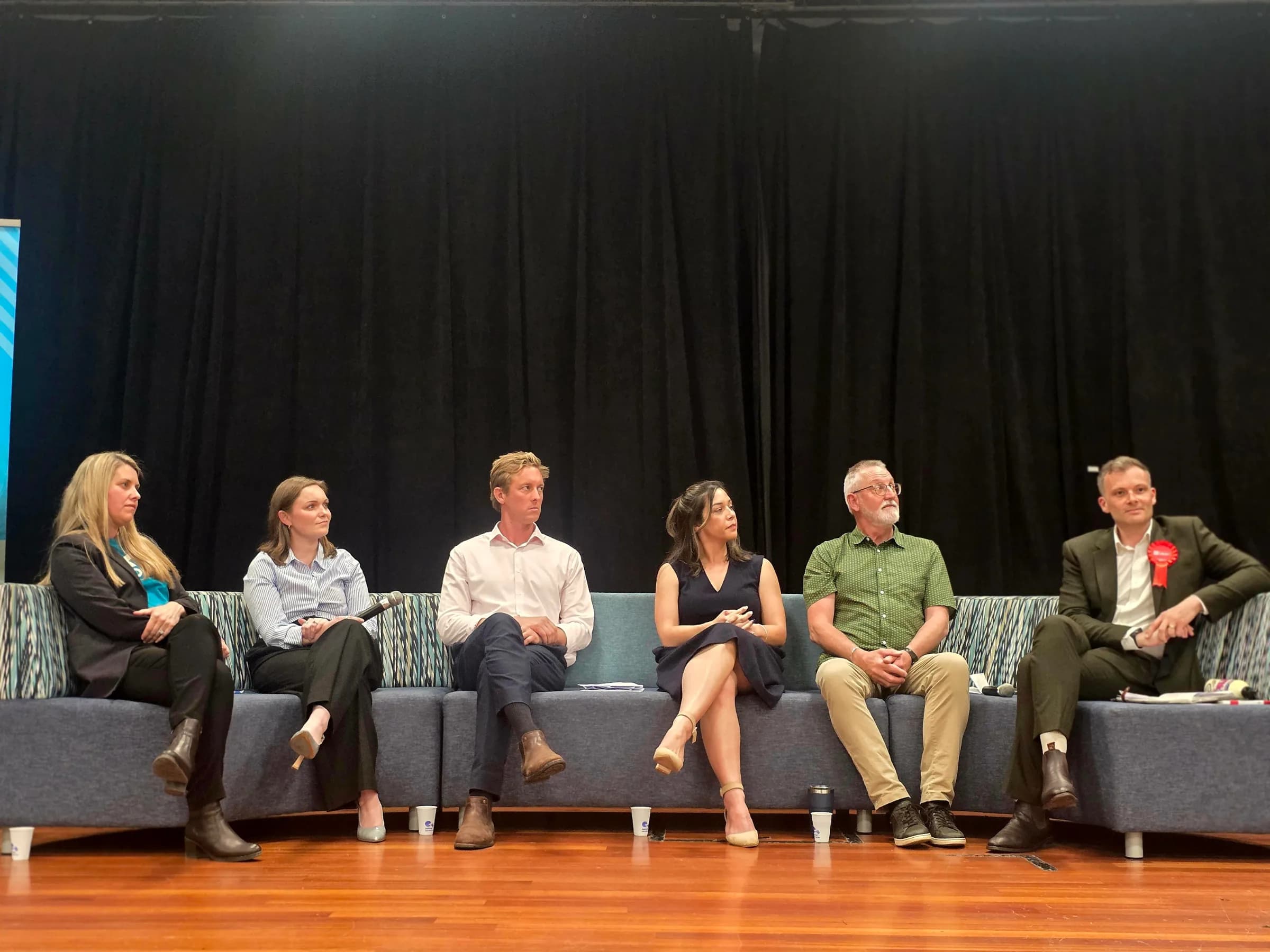
Napier’s need for better healthcare drew broad agreement, but election candidates offered different prescriptions at Tuesday night’s electorate debate.
Proposals ranged from hiring more nurses and expanding pharmacists’ roles to free GP visits and a long-term funding plan, with candidates also emphasising prevention and better access to local services.
The Hawke’s Bay Today debate at Napier Boys’ High School brought together Nimon, Hedley, the Greens’ Roy Boonen, ACT’s Johno Ormond and New Zealand First’s Te Kira Lawrence.
The Opportunity Party’s Tukituki candidate Rachel Ward also took part, seeking support for her party vote campaign. Hawke’s Bay Today editor Chris Hyde moderated the evening.
Hedley said concerns about the retreat of health services from Napier had helped motivate him to stand for Parliament.
He argued that addressing staffing shortages would help resolve overnight care closures, and highlighted Labour’s proposals to employ graduate nurses and provide three free GP visits.
“We cannot treat our way out of a health crisis. We have to have a focus on prevention.”
He also called for doctors to travel to deliver clinics closer to patients.
“I know that it’s easier to move two doctors to run a clinic than it is to move 30 patients for them to attend a clinic.”
Nimon said the region needed strong primary care, reliable urgent care and a high-quality hospital, with better connections for patients across the electorate, including Wairoa.
She pointed to the new 28-bed ward opened at Hawke’s Bay Hospital the previous day and investment in health infrastructure and workforce training.
“We have to have a regionally connected service.”
Reliable urgent care could ease pressure on the emergency department, she said, while patients needing emergency treatment had to reach the appropriate service without delay.
Lawrence called for greater accountability over hospital management, questioning why concerns remained about permanent nursing vacancies and the use of casual staff.
She said New Zealand First’s approach emphasised prevention, nutrition, early intervention and reducing administrative demands on GPs.
“We need to stop being the ambulance at the bottom of the hill. We need to start asking what’s making New Zealanders sick in the first place.”
Boonen outlined the Greens’ proposals for free GP visits and dental care, funded through a wealth tax. He also said housing and food security needed to be addressed to improve health.
Ward advocated increased health funding, greater investment in primary and preventative care, and a funded 10-year plan developed by health professionals.
Ormond questioned whether increased health spending was delivering sufficient value. He advocated allowing pharmacists to provide more services currently delivered by GPs and increasing the share of health spending going towards medicines.
The debate also turned to how Napier could regain its economic “mojo”, with candidates offering proposals for empty shops, business costs and inner-city housing.
Boonen targeted commercial lease provisions that allow rents to rise at reviews but prevent them falling when market conditions weaken.
“So it just goes up, up, up so businesses that are struggling get pushed to the wall and leave.”
He advocated removing those provisions and a process to put leases for long-vacant shops up for auction if landlords could not find tenants.
Nimon said earthquake-prone buildings were an obstacle to inner-city revitalisation. She argued that changes to the rules would help owners bring buildings into use and enable more people to live in the city centre.
Hedley said cost-of-living pressures were leaving residents without money to spend at local businesses. Ward similarly linked the city’s fortunes to household budgets and business costs, while advocating changes to housing and taxation.
Ormond proposed allowing innovation trials that could support new technology businesses, including drone development.
Lawrence highlighted New Zealand First’s proposed company tax reduction, infrastructure investment and support for Napier’s working harbour.
Power prices prompted competing proposals for more generation, stronger competition and changes to market oversight.
Lawrence advocated separating electricity generation from retailing.
“Electricity is an essential service, not a luxury.”
Hedley outlined Labour’s proposed ban on price gouging and support for households to install solar panels and batteries without upfront costs.
Ward wanted the Commerce Commission to have stronger powers to act against monopolistic market structures.
Nimon said increasing electricity supply was the best way forward, alongside making household solar more accessible.
Ormond advocated private investment in transmission lines and giving households more choice over who bought their surplus solar power.
Boonen said the Greens’ proposed publicly owned Kiwi Power would help increase supply and improve competition.
Audience questions broadened the discussion to government debt, GST on food and stability in education.
Amelia McDade, a 16-year-old Year 12 student at Taradale High School, described experiencing changes to NCEA Level 1 and asked how parties would create a more stable education system.
Nimon argued that maintaining the Government’s direction would provide continuity, defending the move from NCEA to a certificate-based system.
“For us, the big thing is, don’t change the government now.”
She said reversing course, which she attributed to Labour, would not be the best outcome for students or teachers.
Hedley disputed that description.
“Labour has heard from the sector that they do not want to have somebody come in and wipe the slate clean and start again. So Katie’s misrepresented Labour’s view there.”
He said Labour wanted to work with teachers and unions to make the changes workable.
Ward proposed a 10-year education plan overseen by an independent teaching council, while Boonen called for teachers to have greater control over decisions affecting their profession.
Ormond defended replacing NCEA and advocated a more decentralised education system, pointing to charter schools.
Lawrence supported retaining the coalition Government and said teachers’ voices needed to be heard.
Speaking to Hawke’s Bay News afterwards, Amelia said she wanted more young people to engage with politics and understand the decisions being made on their behalf.
“I’m really interested in politics, I really think we need more youth interested in engaging with politics because it’s so important, it’s our future that they’re deciding.”
She said she was involved in several youth groups, including the youth council, and wanted other young people to learn about politics now.
“I can’t vote right now, but I know that whatever they do will impact my future.”