Tui turned referee pays tribute to rugby’s unsung heroes
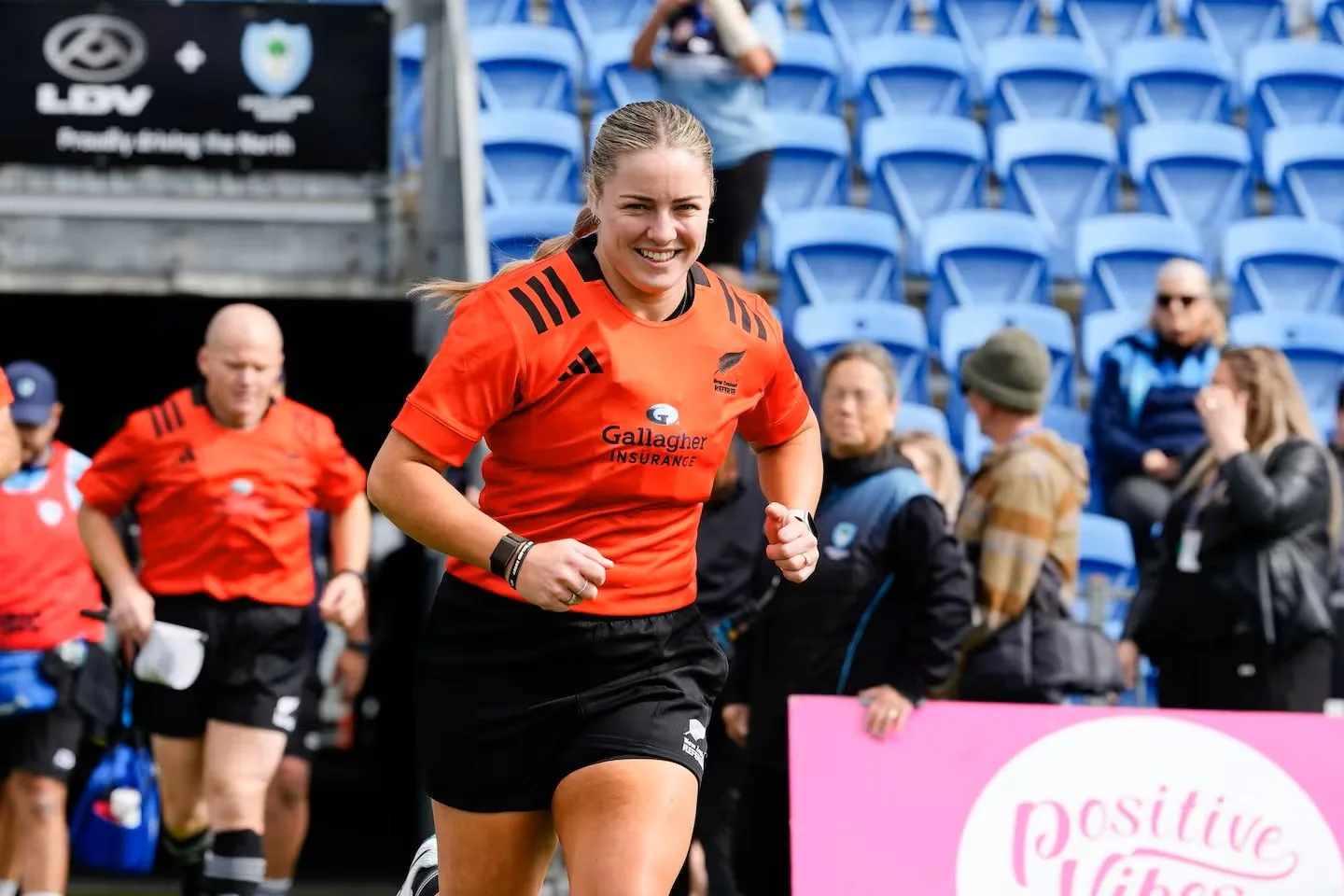
Kaitlin Bates once took the field for the Hawke’s Bay Tui.
Now a first-class referee, she is giving back to the game and supporting a programme recognising the people who help keep it going.
Bates, who works for Farmlands in Waikato, is backing the co-operative’s Rural Rugby Legends programme, which recognises people who give their time to local rugby clubs and communities.
Her own career has been shaped by coaches, mentors and family friends who helped her pursue opportunities as a player and, more recently, a referee.
“Those people are the people that really are the foundation of why I got to where I got to,” she said.
Bates made her first-class refereeing debut in September before taking charge of her former side’s Farah Palmer Cup match against Northland.
She said refereeing offered a way to remain involved at a high level after playing.
“It’s cool to see other opportunities after playing and to be able to still be involved in the game at this high-performance level, but just wearing a different jersey and having a few more words to say is probably the only key difference.”
Her move into officiating began when she was considering her future in rugby. She joined the first intake of New Zealand Rugby’s women’s referee scholarship programme, a two-year introduction to refereeing for players with first-class experience.
Without it, she was not sure she would have tried refereeing beyond an occasional social game. One concern was whether she could meet the standard she had expected of referees as a player.
The people she met through the programme helped her take that step.
“You kind of create a new team and a different team. And those people have sort of helped push me.”
For others considering picking up a whistle, she said there were people willing to help them succeed.
“There are opportunities to learn, there’s opportunities to grow, and there’s other opportunities to stay connected to the game and to those players as well.”
Her referee coach and mentor, Josh Bull, said moving from playing to officiating required a different understanding of the game.
At Bates’ level, reviewing a performance meant considering both the decisions she made and the moments when she chose not to intervene, including whether those judgements helped the game flow.
“Refereeing is a high-performance sport. We expect a lot out of them around fitness, law exams, professionalism on and off the field.”
Bull said having more women refereeing also helped other women and girls see a pathway for themselves in the sport.
Bates said her playing experience helped her understand what teams were trying to achieve.
“I’m always a little bit cheeky on the field. So I love a little bit of the banter. But I love the fact that I can allow teams to play.
“I understand what they’re trying to achieve. And I understand that we want to have enjoyable footy.”
Refereeing the Tui brought her back into contact with former teammates. Northland also held significance as the place where she made her first-class refereeing debut.
Reflecting on the match afterwards, she said: “The game was awesome to be a part of!”
“There was a couple of moments that tested the player management on both sides, but it was unreal to be out there with the talent on field and for a couple of the Tui girls to achieve some pretty cool milestones.”
Her connection to Hawke’s Bay began while she was studying at Massey University in Manawatū. When the local club season finished, she headed to Taradale to keep playing.
“They had about five more games than we had in Manawatū. So we were finished and I just wanted to keep playing footy.”
There she played under coach Steve Woods, whose daughter Gemma was also in the team. An opportunity with the Tui followed.
“I was really lucky to be involved in a pretty cool team and it had some pretty cool people.”
When Bates later returned for another season, family friends Jackie and Peter provided a home in Waipukurau while she worked locally and played.
She said many people contributed to rugby without wider recognition, including the women who maintained teams and their culture year after year.
“For a player like me that comes in and plays a couple of seasons, it’s cool to see that those girls are able to create and hold that culture and hold that community together.”
That commitment came at a cost.
“When we’re not paid to do so, it takes a lot of time and a lot of energy and a lot of money.”
Bull described referees as “the unsung heroes of the sport”, whose involvement made it possible for clubs to play each weekend.
Bates also coaches Hautapu’s 11th-grade players and still occasionally plays herself.
Coaching children in their first year on a full-sized field had been “very, very humbling”, she said, but offered a reminder of the simple enjoyment of rugby.
“They just love rugby. They just want to learn. They just want to carry the ball. It’s just the simple things.”
Her ambitions include involvement in Super Rugby Aupiki and, further ahead, a World Cup or Olympics, whether refereeing or contributing in another role.
“I’d just love to be involved and be able to give back to the game and be able to show people that there are opportunities in rugby.”
The principle she knew as a player, of leaving the jersey in a better place, still guides her.
“I think it’s just about leaving rugby in a better place and being able to provide a place for people to learn and grow and a community for them to have behind them.”
Public voting for Rural Rugby Legends runs until November 5, 2026. The overall winner’s club will receive an upgrade worth more than $50,000, alongside an individual prize package for the winning Rural Rugby Legend. To view the finalists and vote, visit Farmlands’ Rural Rugby Legends voting page.