
Local government reform decisions delayed despite ‘most advanced’ Hawke’s Bay bid
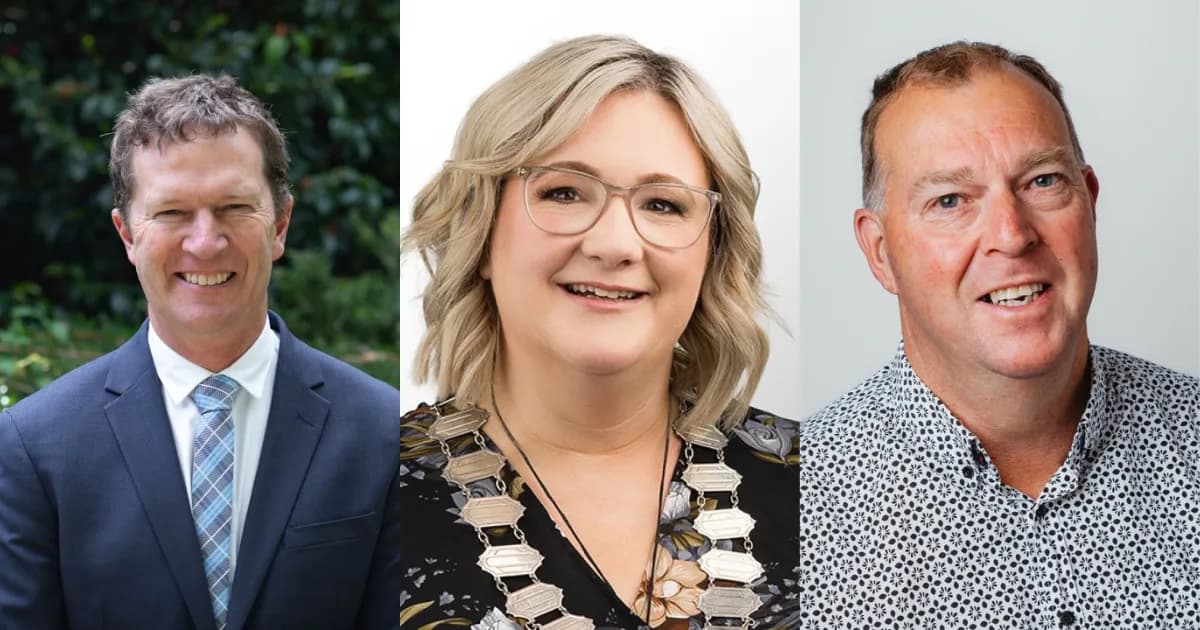
Hawke’s Bay’s Head Start proposal was the “most advanced”, RMA Reform Minister Chris Bishop says, despite the Government deferring decisions on the bids until early 2027.
The delay has disappointed the mayors behind the proposal, who say they will continue working towards a single unitary authority.
Speaking to Hawke’s Bay News during a visit to the region today, Bishop acknowledged their disappointment and said the delay was not a rejection.
“The Hawke’s Bay proposal was, I would say, the most advanced in terms of taking a step forward.”
Hastings, Napier and Central Hawke’s Bay councils submitted a joint proposal in August for a single unitary authority incorporating the functions currently delivered by Hawke’s Bay Regional Council.
It was one of 18 proposals submitted nationwide under Head Start, which gave councils the opportunity to put forward their own local government reorganisation plans.
Cabinet will consider the proposals in early 2027 before deciding which should progress to detailed design.
Bishop said further work on the proposals and the approaching election had prompted the pause.
“So just running out of runway basically to make those decisions in a really informed way. So we’ll come back to it.”
Asked whether the Government should have considered the timing before asking councils to develop proposals, Bishop said that was a legitimate point.
“Without badmouthing local government, I think we anticipated that there would be a bit more consensus coming through from councils than maybe has happened. Now, that’s not to say that this region hasn’t achieved quite a degree of consensus, but other regions have struggled.”
Bishop said the Government would like Wairoa, which chose not to join the joint proposal, to be included.
“It’s always better to achieve consensus when you can. Now, look, they’ve chosen not to, but you know, there’s a chance to revisit that.”
Hastings Mayor Wendy Schollum said the delay was disappointing given the community support and alignment achieved between the councils.
“We have put forward a strong proposal for Hawke’s Bay, backed by community support and alignment between our councils, and have been encouraged by the positive feedback from Government.”
The three councils said community engagement had shown strong support for further exploring a single unitary authority.
Schollum said they entered Head Start to develop a locally led solution rather than have reform imposed through the Government’s backstop process.
“Our communities have asked us to keep working towards a simpler, more effective system of local government. We will keep moving that work forward and remain focused on achieving the best outcomes for our community.”
Napier Mayor Richard McGrath said the additional time could strengthen the work already undertaken.
“The initial proposal was never intended to be the final blueprint. There is more detailed modelling to do around how a future council could operate, including governance and representation, services and finances.”
He said more work with communities was also needed to ensure people had a meaningful role in shaping any future proposal.
Central Hawke’s Bay Mayor Will Foley said affordability and sustainable services had been important considerations.
“We can’t expect better outcomes for ratepayers if we simply keep doing things the way we always have.”
Foley said the extra time would allow the councils to test the proposed model further, strengthen their modelling and work with communities.
Hawke’s Bay Regional Council chair Sophie Siers saw value in the pause, saying her interpretation was that it would give councils more space to focus on resource management reform.
She said regional councils had questioned the demands of progressing both reforms alongside each other.
“It did seem a bit reckless, because you really need councils functioning at their very best to be able to help deliver a new planning framework like RM reform.”
Siers said spatial planning involving all five Hawke’s Bay councils would help clarify what a future local government structure needed to deliver.
Asked whether amalgamation would ultimately happen in Hawke’s Bay, she said it was too early to know, but further investigation was warranted.
“We haven’t gone far enough through the process to understand all the benefits and the risks, but certainly there was enough information to show that this is something we should investigate much more deeply.”
Local Government New Zealand president Rehette Stoltz said councils needed greater certainty after investing significant effort in developing proposals and consulting communities within an “unrealistically tight time frame”.
“Councils were put through a rushed process, only for the Government to now acknowledge that the work could not be completed properly in the time available.”
She said councils needed assurance before committing further resources.
“Before councils do more work, they need certainty the goal posts won’t be moved again.”
Local Government Minister Simon Watts said the proposals required further assessment.
“While the overall quality of proposals was high, none came with the unanimous view of the region, and some needed further analysis before they can progress. These are important gaps we must fill in prior to making final decisions.”
Areas needing further work included fair and effective representation, streamlined governance, and the transfer and delivery of regional functions.
Watts said the Government would address those gaps over the next few months rather than ask councils to commit further time and resources to finalising proposals now.
Bishop said proposals endorsed by Cabinet were still expected to be developed in detail and considered for final approval in 2027, with changes intended before the 2028 local government elections.
Work was also continuing on the backstop process for areas that did not progress through Head Start, with decisions expected in early 2027.
The three Hawke’s Bay councils say they will continue modelling and community engagement and are seeking clear direction from political parties before the election on their intentions for local government reform.