
Central Hawke’s Bay mayor calls for national bridge programme
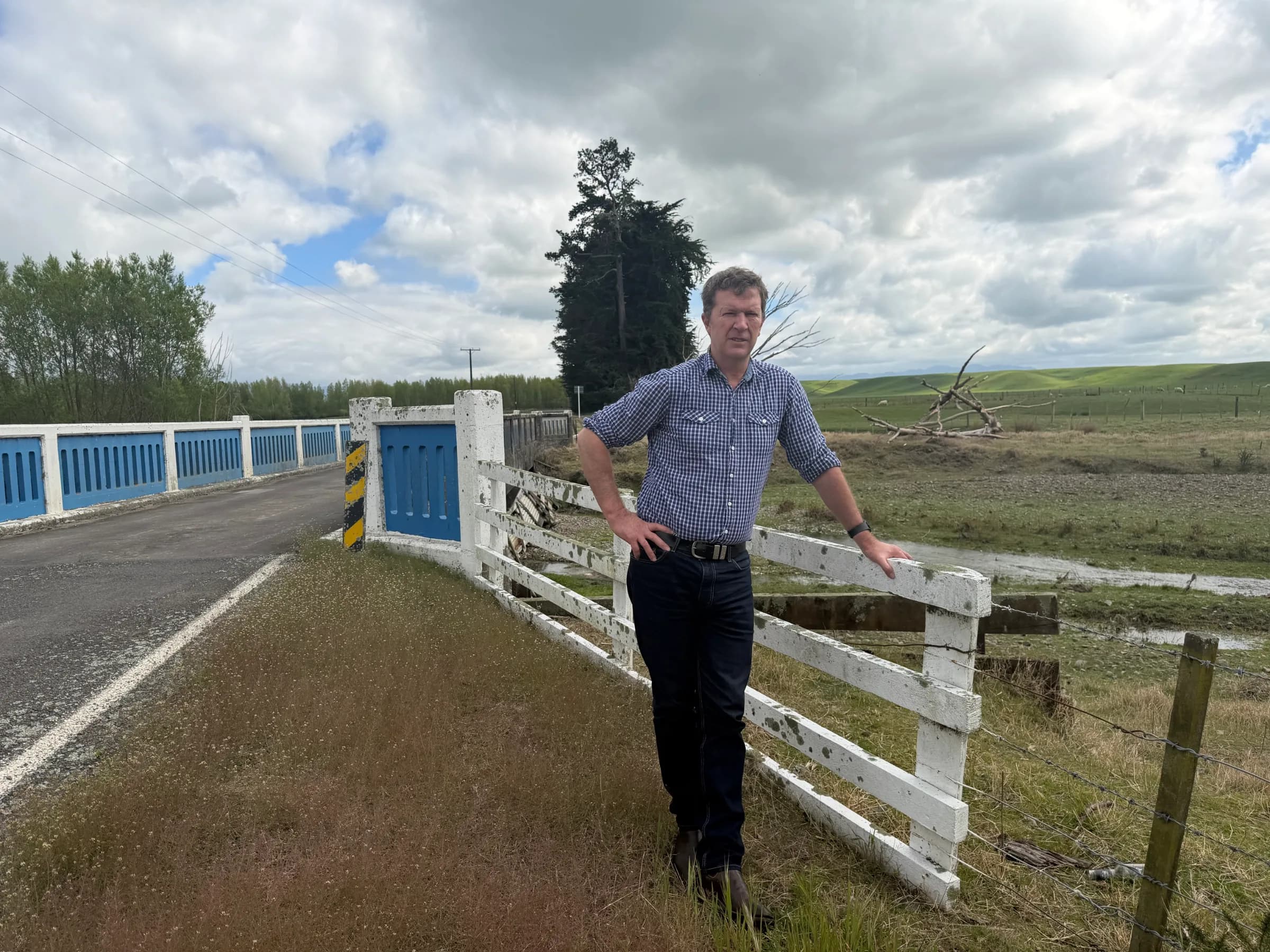
Central Hawke’s Bay Mayor Will Foley is calling for a national bridge programme to reduce the cost of replacing ageing bridges and ease the burden on ratepayers.
Foley wants central government, NZ Transport Agency Waka Kotahi and councils to work together on standardised designs, modular components and coordinated procurement across state highways and local roads.
He has written to Transport Minister Chris Bishop, NZTA and transport spokespeople across the political spectrum proposing the National Bridge Programme.
Foley says Central Hawke’s Bay District Council maintains 170 bridges and more than 1200 kilometres of roads, with 8563 ratepayers contributing to their upkeep. Much of the bridge network is ageing and requires significant repairs or replacement, he says.
According to the council, a recent structural assessment put the cost of replacing Pettit Valley Bridge at about $3.5 million.
Advice to the council indicated standardisation and modular designs could reduce that cost by 20–30 per cent, with potential savings of about $1 million at the upper end.
“This is a huge opportunity. We know NZTA is considering a similar approach for state highways, I’m asking that local government and local roads are included so that we can benefit from the efficiency gains,” Foley says.
“We don’t have an endless supply of money to rebuild our bridges when they reach the end of their life.”
He says bridges provide vital connections for rural communities and producers.
“These bridges keep us connected, and provide resilience for our rural producers who are the backbone of New Zealand’s export economy. We need to provide councils with the tools to succeed.”
Bishop says he sees merit in seeking better value from bridge replacements.
“I have received correspondence from Mayor Foley on his proposal, and I agree there is merit in looking at how we can get better value for money from bridge replacements.”
He says NZTA is considering how standardised approaches could eventually extend to local roads.
“Not every bridge will be suitable for standardisation, but NZTA is looking at how these approaches could eventually be applied to local roads, working with councils.”
An NZTA spokesperson says the agency released a formal Standardised Designs update in 2025 and is exploring standard bridge designs and modern delivery methods for bridges reaching the end of their working lives.
“Early modelling suggests standardised bridge designs could reduce costs by around 20 per cent on projects where the approach is suitable, while also shortening design and construction timeframes.”
The spokesperson says NZTA is talking to suppliers, reviewing international examples and developing an approach to work with councils on how the changes could eventually apply to local roading infrastructure.
Its work to reduce costs includes streamlining processes, repeatable designs and coordinated procurement, while meeting current building and engineering standards.
NZTA expects key aspects of procurement, design and construction to be standardised ahead of the next tranche of priority bridge replacements between 2027 and 2030.
Foley says councils need ways to deliver infrastructure more affordably.
“We can either accept what is happening and have substandard road infrastructure, or we can be smarter about what we’re doing.”