
Video: Roy Boonen puts Green Party vote at centre of Napier campaign
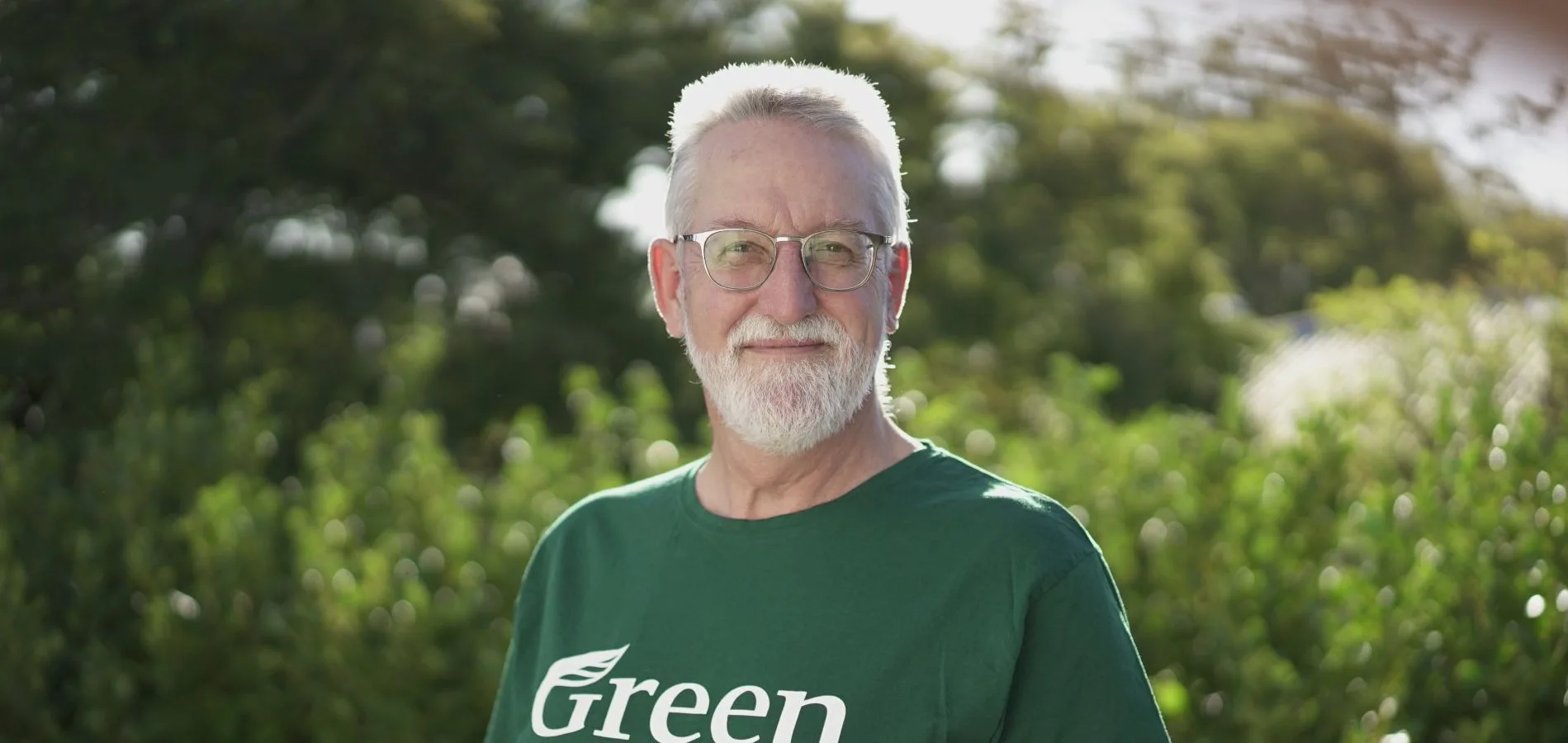
Green Party candidate Roy Boonen says he has no personal ambition to become an MP, but wants to help build the party’s influence in the next government.
Boonen, who is standing in Napier, has been involved with the Green Party for about 15 years, including chairing the local branch and managing campaigns across the past five elections.
But this is the first time he has stepped into the public-facing role of candidate.
“I wouldn’t say I put my hand up for Parliament, I put my hand up to work hard for the Green Party,” he told Hawke’s Bay News.
“I’m here entirely to help people choose Green Party vote.”
Boonen said his motivation was to see a left-leaning government formed after the election, with the Greens holding as much influence as possible within it.
“I don’t have a personal aspiration to be a politician, far from it.”
He said he had been asked to stand at previous elections but had declined, partly because he owned commercial cleaning business Clean Planet and did not want his political views affecting relationships with its customers.
After recently selling the business to a colleague, he decided the time was right.
“I thought, now it’s my time.”
Boonen, 65, has lived in Hawke’s Bay for 37 years.
He initially worked at Hohepa for about a decade before running Taruna College in Havelock North, working in socially responsible finance and later starting Clean Planet.
He said the business grew over 15 years to employ about 60 people and service a couple of hundred clients around Hawke’s Bay.
Outside politics, Boonen is involved with the Cape Coast Community Group at Te Awanga, particularly its work around coastal erosion and flood protection, and chairs a waka ama club based at Clive.
It is his time paddling on the Clive River that he said regularly brings environmental issues into sharp focus.
“Being on that river every few days is a hard reminder of just how unwell that river is,” he said.
“That’s kind of a reminder of why the environment is a real, visceral experience for me.”
Improving waterways is among his key priorities.
Boonen said erosion from Hawke’s Bay hill country was contributing to sediment entering rivers and believed more permanent forestry, particularly around waterways, should form part of the response.
He also pointed to urban stormwater, farming and industrial activity as contributors to deteriorating water quality.
“We’ve collectively harmed the environment,” he said.
Boonen said government had an important role to play in establishing rules and structures that protected the environment, rather than expecting communities and individuals to address the problems alone.
His involvement with the Cape Coast Community Group has also put him close to Hawke’s Bay’s long-running debate over how communities respond to coastal hazards.
He said there would likely be places around New Zealand where retreat ultimately became necessary, while in others adaptation could remain the more cost-effective option.
“We’re going to need to use science, we need to be really honest, and we need to be long term,” he said.

Boonen said decisions needed to consider whether proposed protections would remain effective over 25, 50 or 100 years, rather than simply delaying more difficult decisions.
“If it’s not a long-term solution, then you’re kicking the can down the road,” he said.
While environmental issues are central to his politics, Boonen said economic inequality was equally important to him.
He believes New Zealand’s economic system has increasingly benefited wealthy individuals and large corporations while many working people have struggled to keep pace with rising costs.
Boonen pointed to the Greens’ tax policy, which he said would impose a 2.5 per cent wealth tax on net assets above $10 million, excluding the family home, and make the first $10,000 of income tax-free.
He said taxation should not automatically be viewed negatively when it funded services such as health, education and infrastructure.
“We need hospitals, we need roads, we need education,” he said.
Asked about the cost of living, Boonen argued more needed to be done to address the market power of large companies and pointed to Green Party proposals around electricity generation and food distribution.
He also believes declining support for the traditional major parties reflects an appetite among voters for more substantial change.
“There seems to be a real reluctance to take bold, transformative steps,” he said.
“I think New Zealand’s hungry for that.”
Boonen said environmental degradation, inequality and the prospects facing young people were issues that could not be measured solely through the Government’s financial accounts.
He said one Green Party aspiration he strongly supported was for every 18 to 24-year-old to either be employed or in education or training.
Ultimately, Boonen said his reasons for standing came back to the world being left for future generations, including his three children and two grandchildren.
He said he wanted them to inherit a healthier environment where harm was being reversed, as well as a fairer society in how the country’s wealth was shared.
“The Green Party is the only party that has the big vision,” he said.
“We need to shift the government’s default position of being conservative, reactive, adversarial and small-minded to having ambitious, bold plans, and then having plans to achieve them.”